A Calling Rooted in Timber and Faith
The Story of Deacon Bryan Bassa and the Little Log Church He Could Not Let Go of
The Story of Deacon Bryan Bassa and the Little Log Church He Could Not Let Go of
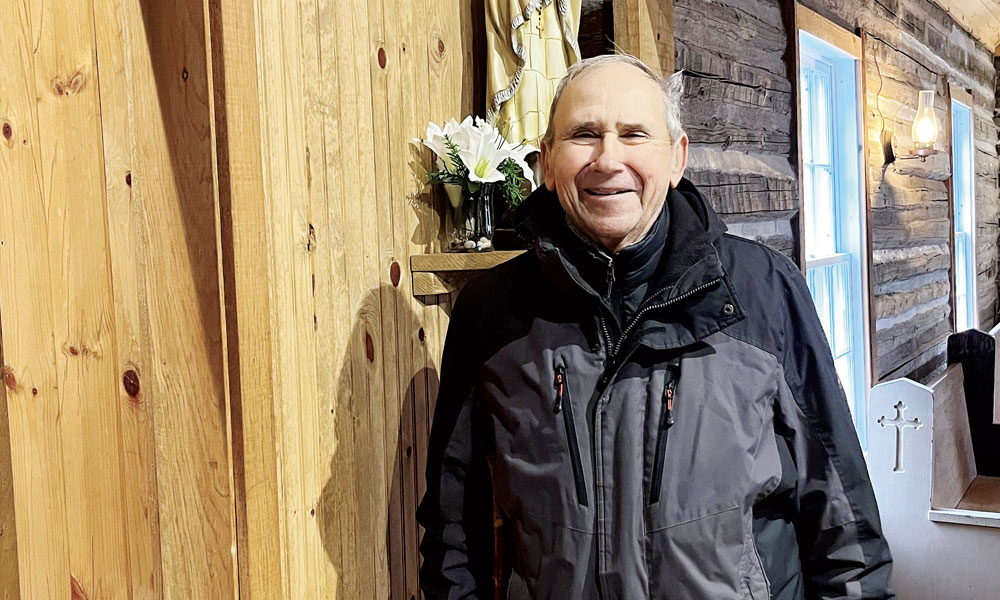
As a boy, Bryan Bassa imagined himself someday becoming a priest. Life shifted that path early when his father died and his mother became seriously ill. His hopes for religious life paused so he could care for her and support his younger brother, guiding him all the way through college. Those responsibilities delayed his vocation, although the desire to serve God never left him.
He spent 35 years teaching at Willow River before retiring early. Throughout that time, he remained connected to his parish by teaching religion classes and tending the church grounds, often mowing the lawn with his own mower. Faith continued to anchor him through the years, and after retirement he committed himself to the call that had endured in his heart. He entered formation and became a permanent deacon, a role he has now held for 16 years.
His affection for his parish community is genuine. “The people have been so good to me,” he says. Their support and faithfulness shaped his ministry. Yet his vocation revealed another dimension early on — one centered around a small, aging log church next to Sts. Mary and Joseph Catholic Church in Sawyer.
A Vocation with Wooden Walls
In his early years as a deacon, he served on the parish Finance Council. During one meeting, the discussion turned to the Old Log Church, a historic structure long in disrepair. Funds were scarce, and some felt that investing significant money and effort into restoring the building simply wasn’t practical. The mere idea of letting it go unsettled him, though. He cherished the building’s humble beauty and historical significance and felt that losing it would mean losing a piece of the community’s soul. In that moment, he thought firmly, “No way! We have to save this church!”
His connection to the church began when, for his ordination in 2010, he received an old black-and-white photograph of the Log Church. Something about the image resonated with him. At that moment, he realized his call included not only serving the people, but preserving this piece of their history. “This old log church became my baby,” he says.
A Sacred Landmark of Native and Catholic Heritage
The Sawyer Old Log Church stands on the Fond du Lac Reservation of the Lake Superior Band of Chippewa. The building was constructed in 1884 by Chippewa parishioners and survived the devastating fires that swept Carlton County in 1918. The land was donated by Angus Robideau, a member of the band, and the construction was led by Moses Posey, a respected elder. Father Casimir Vogt, a Franciscan missionary, helped guide the early mission.
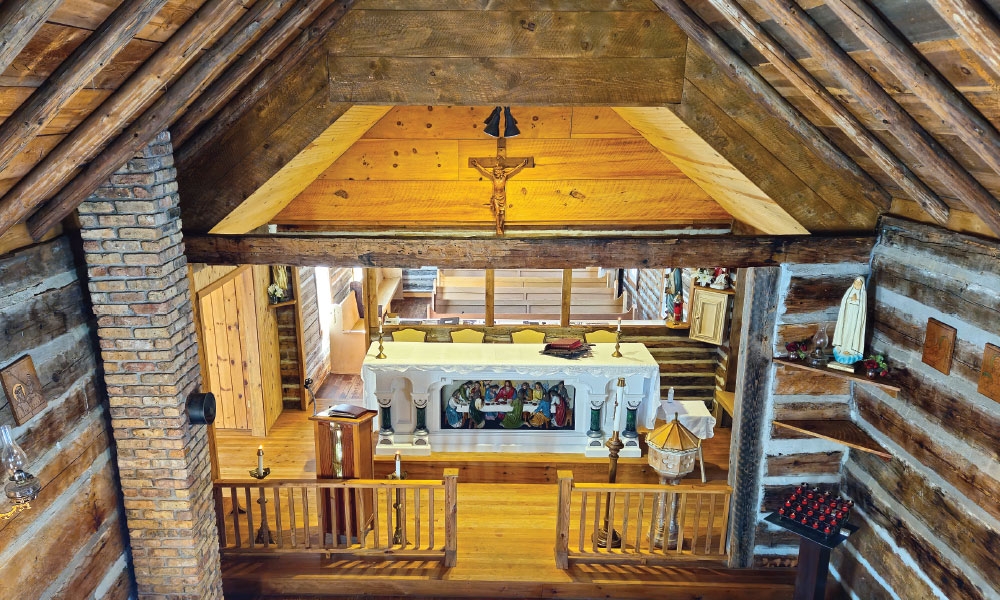
Many original features remain intact, including beams, walls and the original oil lamps that hang beside newer ones. A small built-in confessional stands near the altar, complete with a simple grate and kneeler. Deacon Bassa jokes that the organist “had to play loud” to give parishioners any hint of privacy.
The church has known seasons of silence. It sat vacant from 1908 until 1923, when a grieving family pleaded for it to reopen. Weekly Masses resumed, and a bell tower with a rope-pulled bell stood outside. During restoration work, the original 1886 bell was found being used by local sisters as a dinner bell, and they gladly returned it.
The church officially closed in 1964, yet the log structure remained waiting for its next chapter.
Saving the Church
Speaking about the Log Church brings out an unmistakable emotion in Deacon Bassa. His whole face brightens when he describes its history, and tears surface when he recalls the struggle to preserve it. “We saved this church,” he says. “We have a treasure out here in Sawyer, a true gem.”
When the parish voted on whether to save the structure or tear it down, only two votes supported preservation — his and that of one other parishioner. There was no money set aside for restoration, so he searched throughout the diocese for help. A fundraising committee eventually formed, although the task ahead felt daunting.
Hope arrived one Christmas Eve. After Mass, word came that Catholic Extension had sent a check to support the restoration. Additional support came from the Black and Indian Mission Office of the U.S. Conference of Catholic Bishops (USCCB), along with generous local donors who recognized the significance of the building. A plaque in the sacristy honors Catholic Extension’s contribution towards saving the church.
Another key figure in the effort was Father Frank Perkovich, who spent a month covering weekend Masses one summer. He traveled from the Iron Range each time and immediately fell in love with the little church. Deacon Bassa asked if they could take a collection during that month to support restoration. Father Perk agreed and announced boldly during Mass, “I’m going to start by contributing the first $1,000. I challenge all of you to match it!” His energy inspired parishioners, and their affection for him grew.
A plaque honoring his dedication also hangs in the sacristy.
Restoration work was extensive. The altar, with its intricate depiction of the Last Supper, required complete reconstruction and now stands as the oldest wooden altar in the Diocese of Duluth. The high altar, discovered after 43 years left in the woods, underwent thorough restoration as well. Today, it resides inside the new Sts. Mary and Joseph Church as a shrine to St. Kateri Tekakwitha, holding a first-class relic of the saint.
Bishop Paul Sirba championed the project and designated the Log Church an official pilgrimage site after its restoration. Father Maurice Henry Sands from the Black and Indian Mission Office of the USCCB traveled from Washington, D.C., to bless the church.
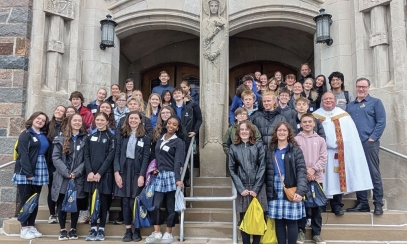
Visitors sometimes arrive by the busloads. Deacon Bassa regularly leads tours for schools and parishes. Each year, parishes from eastern Duluth make a special trip to visit him and the historic church. He encourages anyone who can to visit.
The small space offers a glimpse into another era. Pews are smaller, the building more modest, yet the sense of history is profound. Of all its features, he especially cherishes the confessional and the altar, calling the altar “something truly special.”
A Light Recognized
This year, the Diocese of Duluth nominated Deacon Bassa for the national Lumen Christi Award from Catholic Extension, which honors individuals who radiate the light of Christ through exceptional ministry. The recognition humbles him.
For Deacon Bassa, the true reward remains those cherished moments inside the Old Log Church, surrounded by timber, history, and the unmistakable presence of the generations who prayed there. He breathes deeply, knowing his vocation helped keep the building alive.
“We saved this church,” he says, voice full of gratitude. “We have a treasure out here in Sawyer. A diamond in the rough.”
Lumen Christi Award Nominee
Since its inception in 1978, the Lumen Christi Award — Catholic Extension Society’s highest honor — has been presented annually to individuals and institutions who radiate the light of Christ in the communities they serve.
Nominees are selected by their bishops as examples of the Church’s mission in action — people and organizations who lead others closer to God and help transform their communities. Among this year’s nominees, Deacon Bryan Bassa was chosen by Bishop Felton as the 2026-2027 nominee of the Diocese of Duluth, recognized for his ministry and his dedication to restoring and maintaining the historic log church in Sawyer.
This annual award serves as a powerful reminder of the Catholic Church’s positive and transformative impact on society.
If you know someone who should be considered as a future Lumen Christi nominee from the Diocese of Duluth, please contact Margaret Slawin, director of mission advancement, at Margaret.Slawin@duluthcatholic.org.
learn more
The Old Log Church
Located at 1225 Mission Rd, Sawyer, MN 55780
To arrange a tour, contact Deacon Bryan Bassa: 218.879.6933